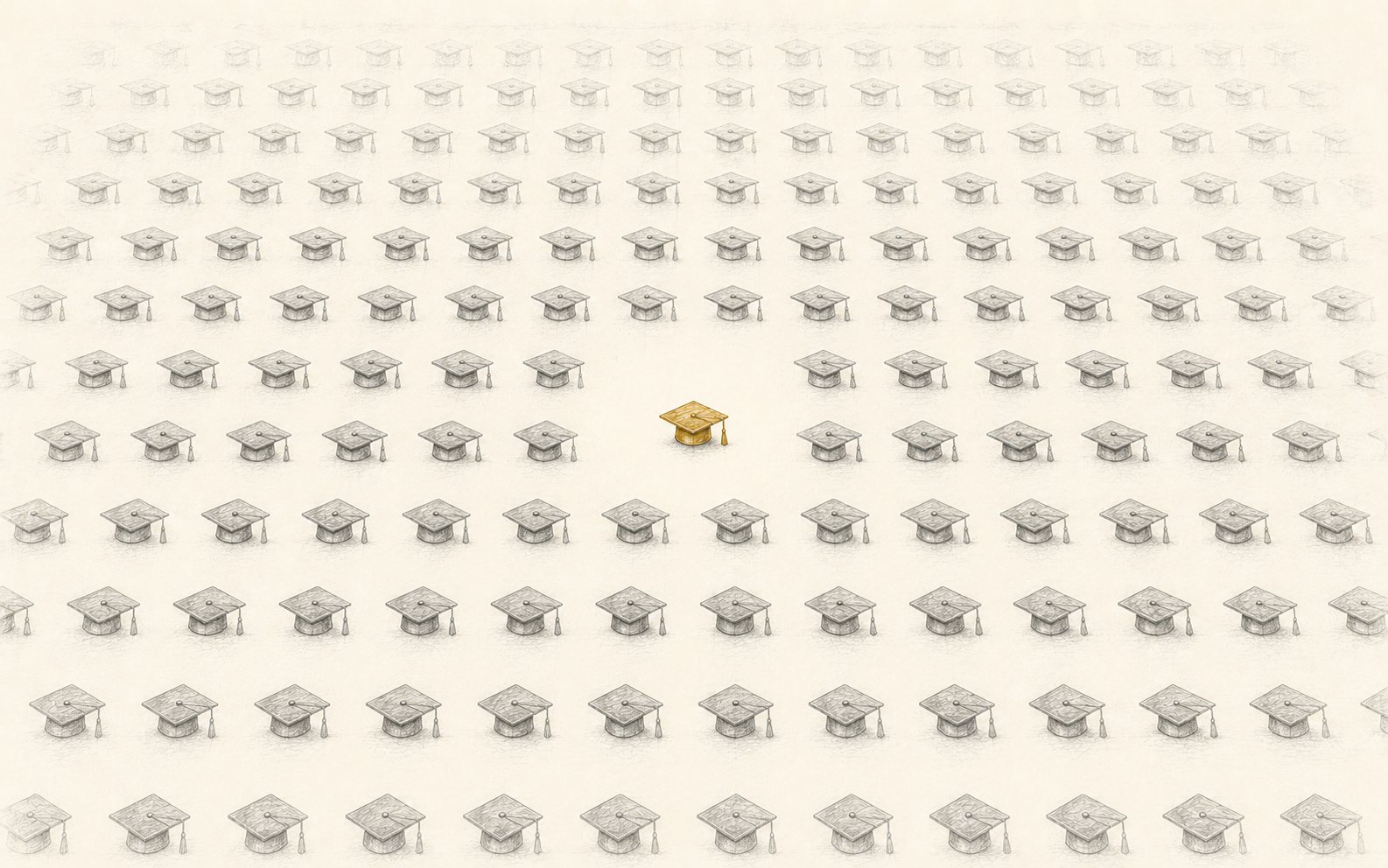

Of everything in your application, the motivation letter is the only part you can still change. Your transcript is history; your admission letter is someone else’s decision. The letter is yours — and because we read every word of every one, it seems only fair to tell you what we are reading for.
What the letter is not for
The letter is not for proving you are excellent. Your transcript does that; your admission to a demanding programme does that. Restating your grades in prose wastes the one document that can say something your records cannot. Nor is the letter a test of eloquence. We are a STEM foundation; we do not award scholarships for prose style, and we can tell the difference between a beautiful sentence and a true one. When in doubt, choose the true one.
We can tell the difference between a beautiful sentence and a true one. Choose the true one.
The three questions
A motivation letter has succeeded when the person reading it can answer three questions in your own words. Why this field — not why it is important in general, but why it has a hold on you in particular; the honest version of this answer is usually specific, and often small: a problem you could not put down, a course that rearranged how you think. Why this programme — what this university, this laboratory, these people offer your work that staying put would not; this is where we learn whether you chose the programme or merely its ranking. And what it is for — what you intend your knowledge to mean, for your discipline and, in whatever form your life makes possible, for Georgia.
On honesty about circumstances
Some applicants hesitate to write plainly about financial circumstances, as if need were a weakness in the file. It is not. The foundation exists precisely because talent and money are not distributed together. State what you need and why, without drama and without apology — the funding request asks for numbers, and the letter can give the numbers their context.
Practical notes
Write it yourself. A letter polished by other hands — or generated by a model — reads exactly like what it is, and its perfection works against you; the small roughness of a real voice is evidence, not error. Keep it to one page or so: length signals anxiety, not seriousness. Be specific everywhere you can — specificity is the hardest thing to fake and the easiest to believe. And before you submit, read it once and ask whether a stranger could mistake your letter for anyone else’s. If they could, it isn’t finished.
The scholars we fund will spend years being measured by demanding standards. The letter is simply the first honest conversation of that relationship. Treat it that way, and it will do its work.